
-
IIMB Archives
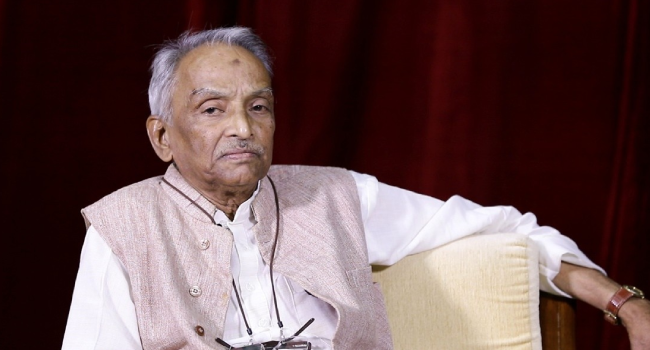
Professor K. R. S. Murthy, professor in the Corporate Strategy and Policy area, was academically trained in Business Policy and Strategic Management, holding a Doctorate in Business Administration (Business Policy) from Harvard Business School, a Master’s in Management from the Sloan School of Management, M.I.T., and a Master’s in Statistics from the University of Mysore, where he won the Gold Medal. His primary academic specialisation was Business Policy and the Strategic Management of Public Enterprises, and his published work included several articles—individually and jointly authored—particularly in the area of Public Enterprise Management.
Over the course of his career, Professor Murthy built substantial academic and administrative experience through associations with institutions such as IIM Ahmedabad, the Institute of Rural Management, Anand, and Boston University, USA, and through professional engagements with organisations including Tata Consultancy Services and The Economic Times, Bombay. He also served on the boards of several companies.
Professor Murthy had a distinguished academic career spanning nearly two decades at IIM Ahmedabad before assuming leadership at IIM Bangalore, where he served as Director for over six years. Born in Mysore and educated at Maharaja’s College, he built much of his professional career outside Karnataka, particularly in Gujarat. At IIM Ahmedabad, he taught Business Policy and Strategy and was deeply influenced by the Harvard case method tradition, which shaped his intellectual orientation toward institution building, strategy formulation and implementation, and adapting management theory to Indian realities.
Professor K. R. S. Murthy viewed his appointment as Director of IIMB as a chance to practise what he taught about institution building. His academic interests reflected a strong engagement with the interface between public systems and markets, regulation, liberalisation, and institutional adaptation—concerns consistent with his long-standing focus on public enterprise management and strategy.
While IIMB had historically been organised around sectoral groupings, during his tenure many faculty were reorganised into functional “areas,” with sectoral interests consolidated under what later became Public Systems. This transition preserved research in public policy and sectors while aligning the Post Graduate Program (PGP) more closely with stakeholder expectations. Professor Murthy contributed to the PGP, particularly in Business Policy and strategy-oriented courses. He emphasised case-based teaching, contextual analysis, and the application of theory to Indian conditions.
Under his leadership, the PGP underwent major restructuring. Sectoral course requirements were removed as compulsory elements, electives were expanded significantly, and the curriculum was redesigned to better align with private industry and the liberalising economic conditions of the 1990s. He strengthened Executive Education through Management Development Programs (MDPs) and Organisation Based Programs (OBPs), positioning them as important revenue and outreach channels. The Management Program for Technologists (MPT) was launched in 1992-93 to equip engineers and manufacturing professionals with managerial capabilities.
A defining contribution of Professor Murthy’s tenure was the transformation of IIMB’s academic identity. He initiated a comprehensive PGP review, eliminated mandatory sectoral course quotas, expanded functional electives, strengthened communication training (WAC), and recruited faculty with both theoretical depth and industry exposure. He encouraged case writing in emerging areas such as regulation and liberalisation, recognising that theory must be applied contextually. During his tenure, IIMB secured the UNDP-supported Centre for Public Policy after a competitive national selection process, reaffirming its commitment to public systems research. The Centre was established in July 2000.
Professor Murthy devoted considerable attention to faculty recruitment. He actively recruited high-quality FPM graduates and returning Indian scholars, responded quickly to prospective candidates, and personally assessed institutional fit.
As Director, Professor Murthy asserted clear academic leadership. Administrative restructuring made program heads responsible for academic delivery, with support staff reporting functionally to them. The administration was repositioned as facilitative rather than parallel to academic leadership. He introduced ethical discipline in financial matters and transparency in decision-making , signalling that integrity was non-negotiable. His efforts contributed to the stabilising of institutional governance.
Professor Murthy oversaw major improvements in physical and technological infrastructure, including expansion and redesign of classrooms for discussion-based pedagogy, completion of construction projects, conversion of faculty housing and optimisation of hostel capacity, introduction of 24-hour library access, establishment of Internet connectivity (on 31st December, 1995, making IIMB the first among IIMs to be connected to the Internet), and strengthening of IT and communication infrastructure. He undertook large-scale greening of the campus, planting nearly 2,000 rain trees to create a shaded academic environment. The Institute logo was redesigned with the Sanskrit motto Tejaswi Navadhitamastu (“Let our study be enlightening”), reflecting both continuity and renewed institutional identity.
He strengthened OBPs with organisations such as BEL, ITI, Infosys, and Wipro, and established collaborations including the International Master’s Program for Managers (IMPM) with Professor Henry Mintzberg in November 1996 and a joint programme with MIT’s Sloan School on manufacturing and technology in July 1996. Under his leadership, IIMB increased its own-revenue generation and began producing operating surpluses, partly through fee revisions and stronger executive education programmes.
Beyond institutional leadership, Professor Murthy’s broader academic contribution lay in adapting strategy and public enterprise management concepts to Indian conditions, especially during the transition from a state-led to a liberalising economy.
By the end of his tenure in 1997, IIMB had strengthened its academic standing, reputation, faculty base, infrastructure, financial sustainability, and internal culture. He left satisfied that the institutional transformation had taken root, while recognising that institutional evolution is always ongoing.
Link to an account of the launch of the IIMB Golden Jubilee publication, ‘The Evolution of IIMB: Directors’ Perspectives’
https://www.iimb.ac.in/archives/directors-perspectives.php
For more from “The Evolution of IIMB: Directors’ Perspectives”, which features interviews with former Directors Professors J. Philip, K. R. S. Murthy, M. Rammohan Rao, Prakash G. Apte and Sushil Vachani, and a foreword by the then Director Professor G. Raghuram, and an essay (reproduced from an earlier collection) by the first Director Professor N. S. Ramaswamy visit
( https://www.iimb.ac.in/archives/directors-perspectives.php )
Click to read the book : https://www.iimb.ac.in/sites/default/files/directors-perspectives/#p=1
Link to snippets from an interview with Prof. K. R. S. Murthy, on the occasion of the Golden Jubilee celebrations of IIMB 2023, recorded on 28 March 2023.
https://www.iimb.ac.in/archives/krs-murthy.php
Link to films commemorating IIMB’s Golden Jubilee in 2023
https://www.iimb.ac.in/archives/video-library.php
For a round table discussion on management education published in 1998, featuring the perspectives of the directors of IIM Ahmedabad, IIM Bangalore and IIM Calcutta, Professors Jahar Saha, Pradip Khandwalla, M. R. Rao, K. R. S. Murthy, Amitava Bose and Subir Chowdhury refer to:
Venkatesh, S (1998) "Management education: In prospect and retrospect: A view from the helm – IIM directors' perspective," IIMB Management Review: Vol. 10: Iss. 1, Article 18. Available at :
https://research.iimb.ac.in/imr/vol10/iss1/18