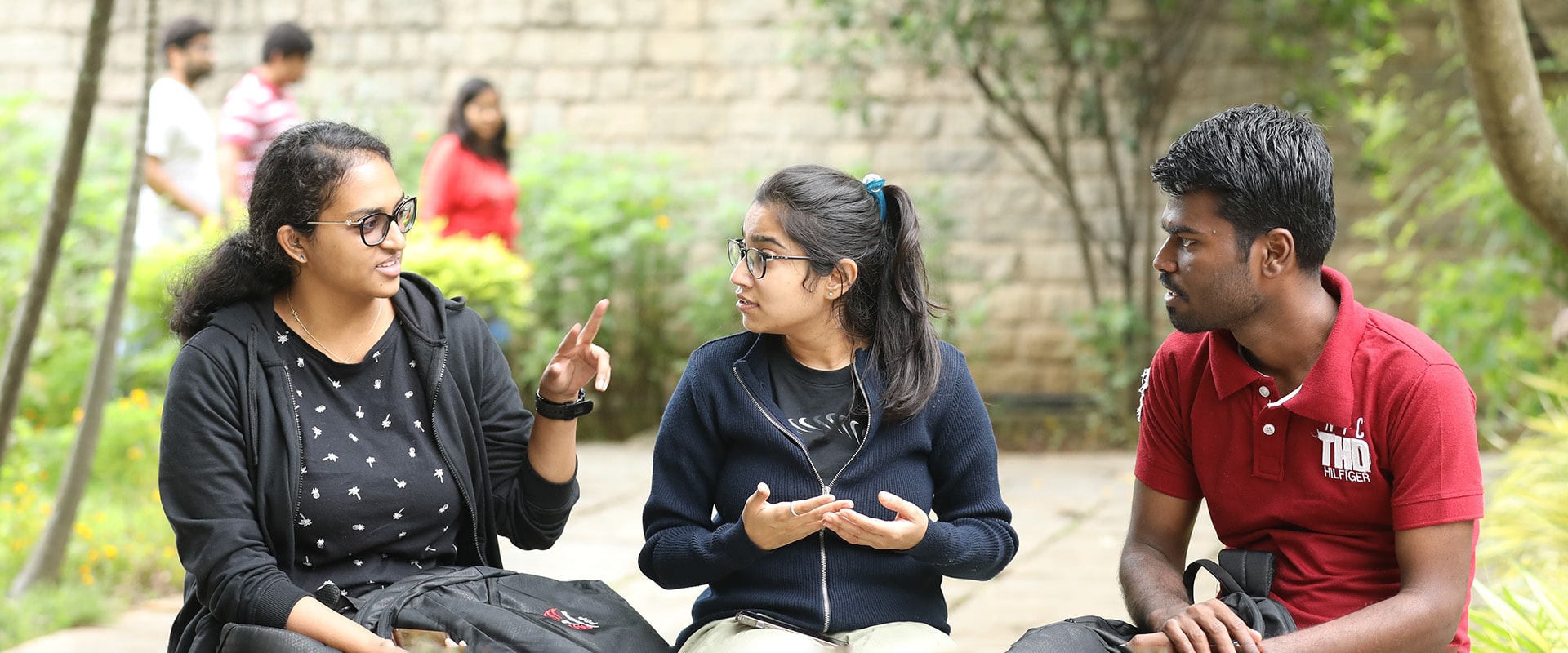
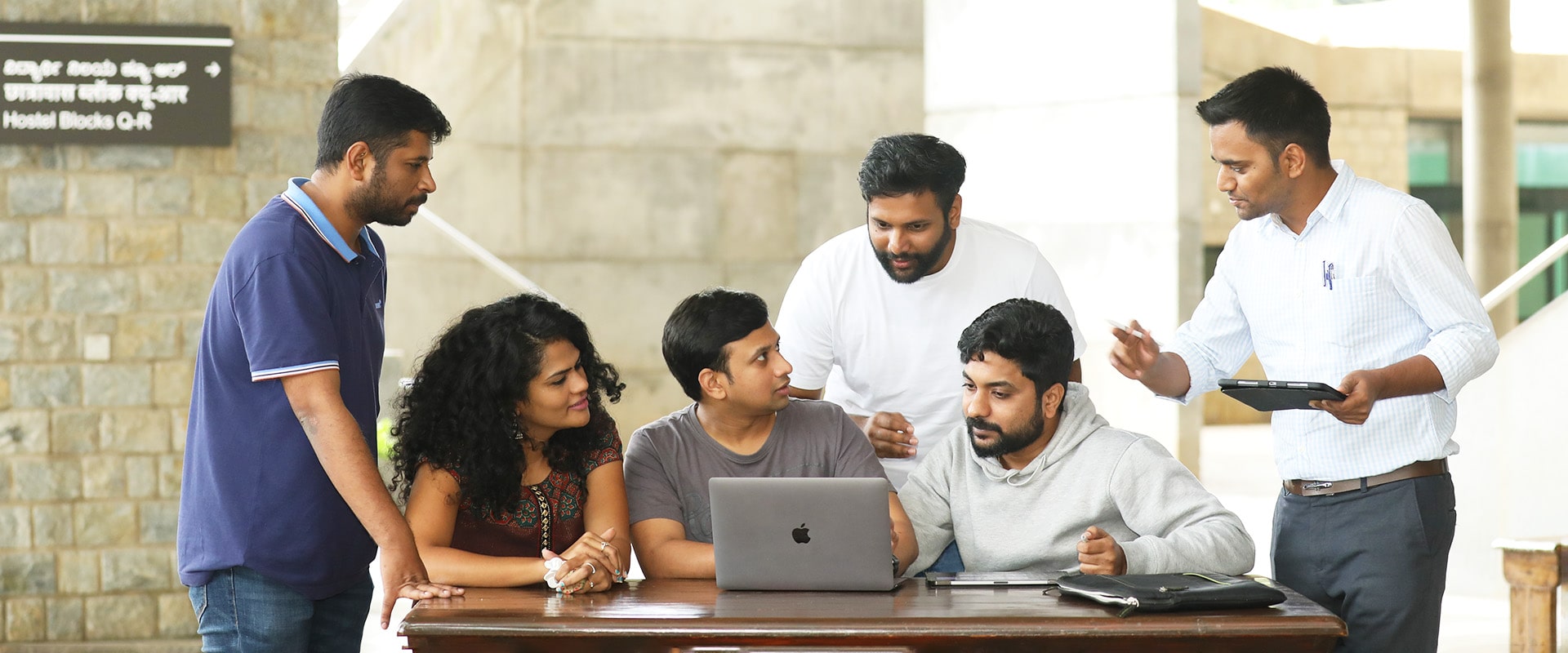
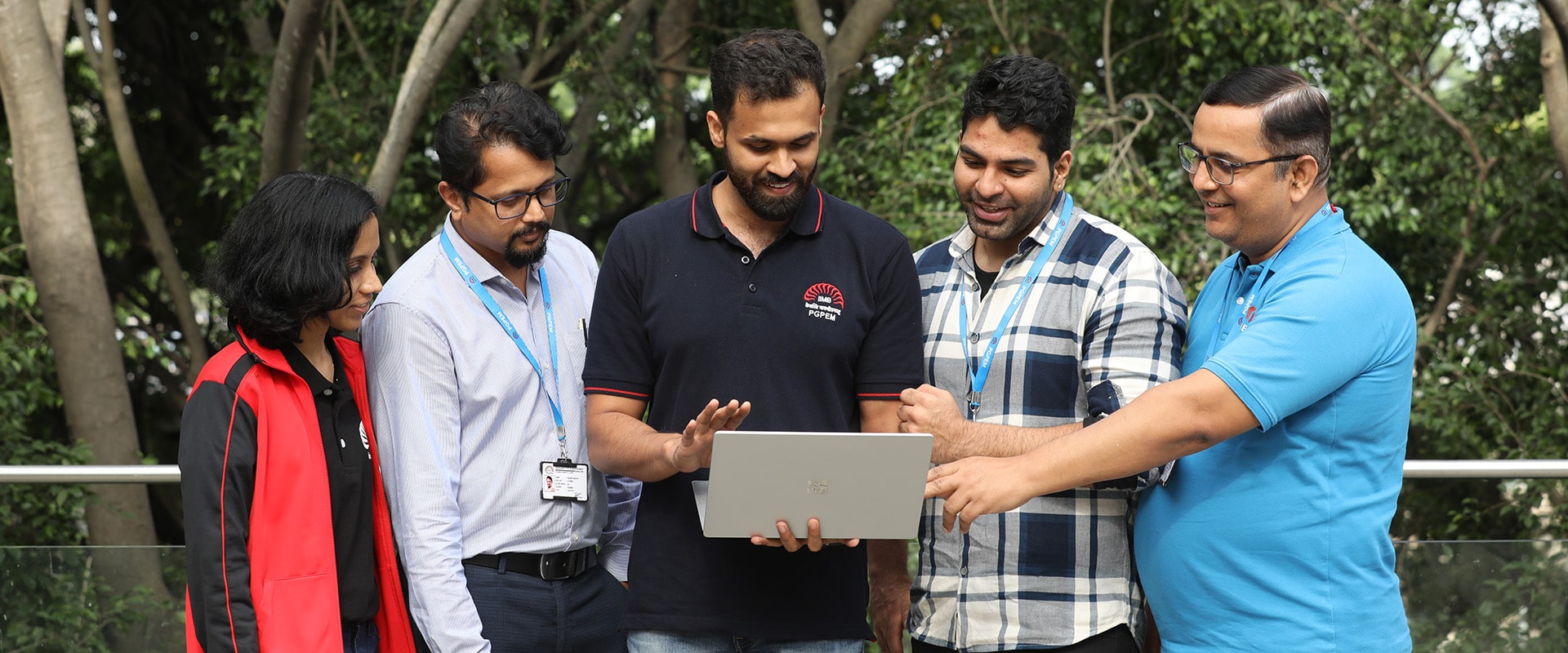
- The Indian Institute of Management Bangalore (IIMB) is a leading graduate school of management in Asia. Under the IIM Act of 2017, IIMB is an institute of national importance.
- IIMB has 107 full time faculty members, about 1200 students across various degree-granting programmes and nearly 5000 annual Executive Education participants.
- IIMB's logo carries a proclamation in Sanskrit, तेजस्वि नावधीतमस्तु (tejasvi navadhitamastu), which translates as ‘let our study be enlightening’. Our vision is to be a global, renowned academic institution fostering excellence in management, innovation and entrepreneurship for business, government and society.
- Located in India’s high technology capital, IIMB is in close proximity to some of the leading corporate houses in the country, ranging from information technology to consumer product companies, giving us the added advantage of integrating classroom knowledge with practical experience.
DEGREE-GRANTING PROGRAMMES
English is the medium of instruction for all programmes offered by the school. IIMB offers the following academic programmes

Duration : Five-year fulltime
Eligibility : Master's Degree
The Doctoral Programme of IIMB is committed to train individuals who will excel in their area of research through publication of high-quality work of international standard.
Upon successful completion of the academic requirements, the programme leads to the grant of the degree of Doctor of Philosophy.
The Post Graduate Programme (PGP) in Management leading to a degree of
Master of Business Administration (MBA)
Duration : Two-year fulltime
Eligibility : Bachelor’s Degree
The PGP is designed to equip student with the skills and capabilities that will enable them to reach responsible global position in management. The PGP revolves around the principle that world-class business leaders are not mass-produced; they are nurtured and developed in a practical application-oriented, user-friendly environment.
Upon successful completion of the academic requirements, the programme leads to the grant of the degree of Master of Business Administration.


The Post Graduate Programme (Business Analytics) leading to a degree of
Master of Business Administration (Business Analytics) (MBA(BA))
Duration : Two-year fulltime
Eligibility : Bachelor’s Degree
The Post Graduate Programme (Business Analytics) is a multi-disciplinary programme intended to equip students to solve business and social problems. The programme will equip the students with defining the problems using analytical tools and techniques to identify patterns, gain insights, develop business strategies and help make better decisions. During the programme the students will acquire analytical mindset and understand methodologies that will facilitate innovative application of analytics across different functional areas of management.
Upon successful completion of the academic requirements, the programme leads to the grant of the degree of Master of Business Administration (Business Analytics)
The Executive Post Graduate Programme in Management (EPGP) leading to a degree of
Master of Business Administration (MBA)
Duration : One-year fulltime
Eligibility : Bachelor’s Degree, Minimum 5 Years of work experience after graduation
The EPGP is an intensive one-year, full-time residential programme for experienced professionals, designed to enhance skills and capabilities essential for responsible positions at senior management levels. The programme is challenging, widespread and globally oriented. The objective of this programme is to produce future leaders who can handle the dynamic corporate environment.
Upon successful completion of the academic requirements, the programme leads to the grant of the degree of Master of Business Administration.

The Post Graduate Programme in Enterprise Management leading to a degree of
Master of Business Administration (MBA)
Duration : Two-year Programme for Working Professionals
Eligibility : Bachelor’s Degree, Minimum 4 Years of work experience after graduation
The PGPEM is a management programme, designed for middle and senior level working professionals. Participants learn from world-class faculty, while strengthening their network through collaboration with peers during their on-campus weekend sessions.
Upon successful completion of the academic requirements, the programme leads to the grant of the degree of Master of Business Administration.
Diploma Programme
Post Graduate Programme in Public Policy and Management
Catalyzed by the Government of India and United Nations Development Programme, the PGPPM is packed with path-breaking insights about winning policy making and management strategies.
CERTIFICATE PROGRAMMES
Since the years of its existence, IIMB has developed a portfolio of vibrant programmes.
N. S. Ramaswamy Pre-doctoral Fellowship (NSR Pre-doc)
Mahatma Gandhi National Fellowship