
The Burning Question: Can PRESPL Turn Pollution into Profit?
India generated nearly 500 million tonnes of agricultural residue annually, a significant share of which was burned in open fields, contributing to severe air pollution and greenhouse gas emissions.
Punjab Renewable Energy Systems Pvt. Ltd. (PRESPL), founded in 2011 by Lt. Col. Monish Ahuja, had built one of India’s most sophisticated supply chains for biomass aggregation and utilization. As voluntary carbon markets were maturing globally, PRESPL Stood at a strategic inflection point — Monish needed to determine which carbon project pathway will define long-term positioning for PRESPL within the changing market dynamics of global climate markets.
Crop residue burning in North India, particularly in Punjab and Haryana during October-November every year, released massive smoke laden with particulate matter (PM2.5 and PM10), volatile organic compounds (VOCs), and other pollutants. The northwestern wind during the winter months spread this pollution to other geographies like the Delhi national capital region (NCR) resulting in hazardous levels of Air Quality Index (AQI), often exceeding 400. The fine particles contributed to dense smog formation by mixing with fog, reducing visibility and trapping toxins. Prolonged exposure to smog irritates eyes, aggravates respiratory illnesses like asthma and bronchitis, and raises risks of lung cancer, cardiovascular diseases, and premature mortality. As a result, the Delhi NCR almost came to a standstill during every winter harvesting season, as the outdoor air became unbreathable. One of the major reasons for burning of crop residue by farmers in India was the lack of adequate machinery and labour, and the too short a time window of 2-3 weeks for residue management of previous crop (paddy) and soil preparation for the next crop (wheat).
The Biomass-to-Energy sector therefore held immense significance for India, as it not only offered a sustainable solution to reduce the air pollution caused by residue burning in North India but also addressed the country’s energy challenge, at least partially. By converting agricultural residues and organic waste into bioenergy, it could reduce dependence on fossil fuels, lower pollution and carbon emissions, and address rural waste disposal issues. With India’s vast agricultural base, the sector possessed substantial untapped potential.
The agricultural land in India in 2025 was estimated to be about 140 million hectares, which was approximately 46% of the country’s total geographical area. India generated approximately 500 million tonnes (Mt) of crop residue biomass annually . This included residues from major crops like rice, wheat, sugarcane, and maize. As per the estimates of the Ministry of New and Renewable Energy, out of this, a surplus of around 150-230 Mt was available after accounting for uses like fodder, fuel, and industrial raw materials. Approximately 18-20% of total crop residue – an estimated 100 Mt – was being burnt annually, primarily in open fields during post-harvest seasons (e.g., October-November for rice and April-May for wheat). This burning contributed significantly to air pollution in the country, especially in northern India.
In addition to pollution reduction, conversion of such vast amounts of biomass to energy can also generate widespread employment, especially in rural areas, through activities such as biomass collection, processing, transportation, and plant operations. This industry thus has the potential to not only support India’s clean energy transition but also foster inclusive development by creating livelihood opportunities for farmers, labourers, and small-scale entrepreneurs.
Seeing the huge opportunity presented by biomass in the renewable energy sector, Lt. Col. Monish Ahuja took early retirement in 2010 from Indian Army and entered the industry through his uncle Mr. Vini Ahuja’s company, Bermaco Energy Limited, which was focused on manufacturing and fabrication of powerplants. Monish, an ex-NDA (National Defence Academy) and EME (Electronics and Mechanical Engineers) Corps officer, faced several challenges in this first venture, which began with building of a powerplant that used biomass as input to generate electricity. This turned out to be costlier than traditional coal-based electricity generation, and a loss-making venture, as electricity price was strictly regulated in the country. However, this experience helped Monish to achieve a steep learning curve in corporate energy projects. He eventually realized that the competitive advantage in this industry lay in building relationships with the farmers and aggregation of biomass. Monish thus went on to launch PRESPL in 2011, which initially focused on the upstream supply chain, starting with biomass collection, storage and briquette manufacturing. Over the next decade and a half, PRESPLE evolved into a full-fledged biomass based renewable energy company that transformed agricultural waste into several forms of bioenergy, the dominant form being steam.
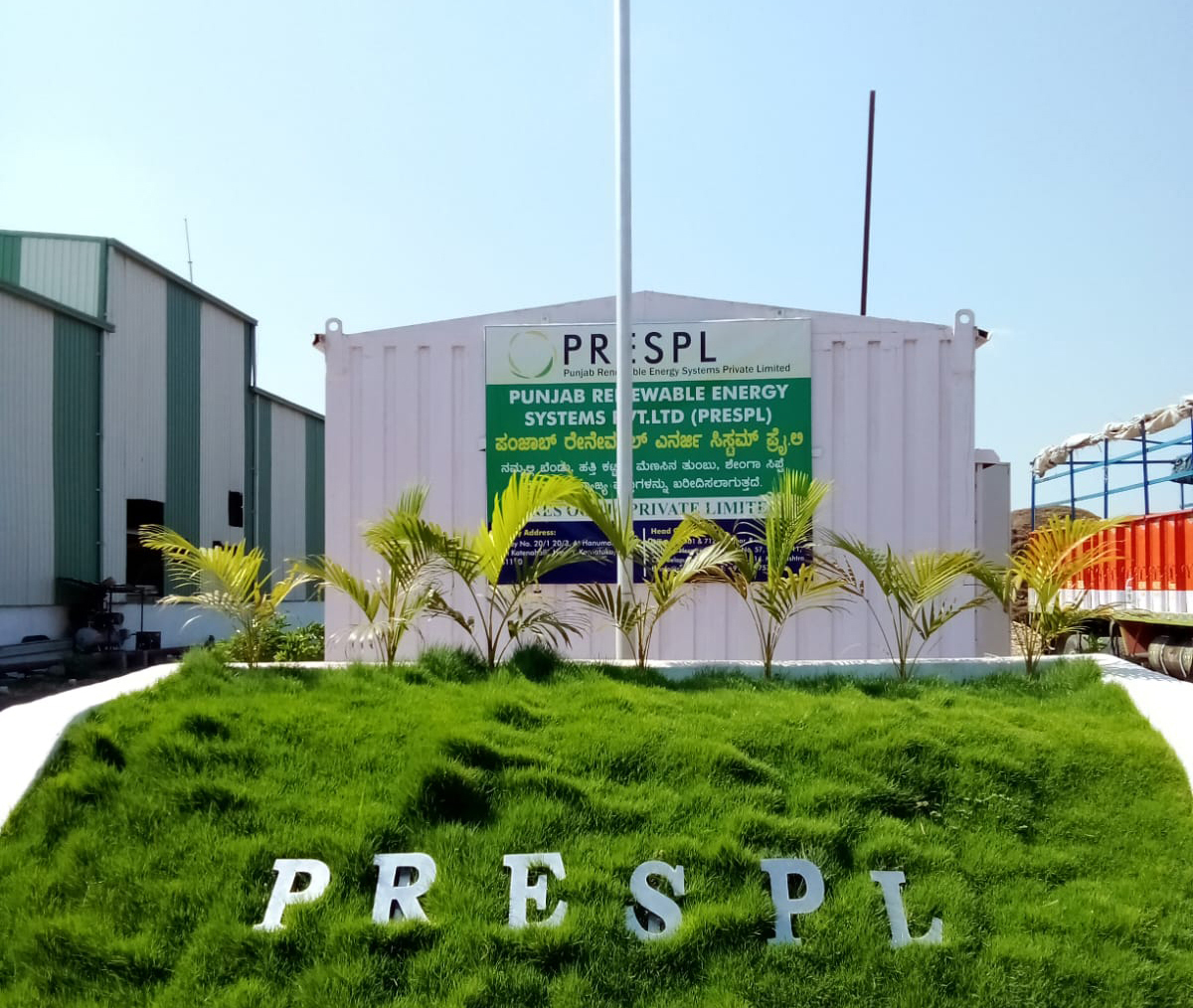
For more details: https://prespl.com/
The upstream supply chain of biomass involved the following stages:
- Collection: Biomass is gathered from its source (e.g., fields, forests, or waste facilities) using equipment like cutters, rakers, balers, shredders and collection vehicles.
- Pre-processing: Biomass undergoes initial treatment to reduce volume, improve transportability, or enhance stability (e.g., drying wet biomass, chipping wood, baling straw etc.). The biomass may be briquetted based on the use case.
- Storage: Biomass is stored at collection sites, intermediate depots, or near the processing plants to ensure a consistent supply, with measures to prevent degradation (e.g., moisture control).
- Transportation: Biomass is moved to the processing plant via trucks or rail optimizing for cost, distance, and energy efficiency.
- Unloading at Plant: Biomass is delivered and unloaded at the processing plant, where it is transferred to the plant’s intake system for further processing.
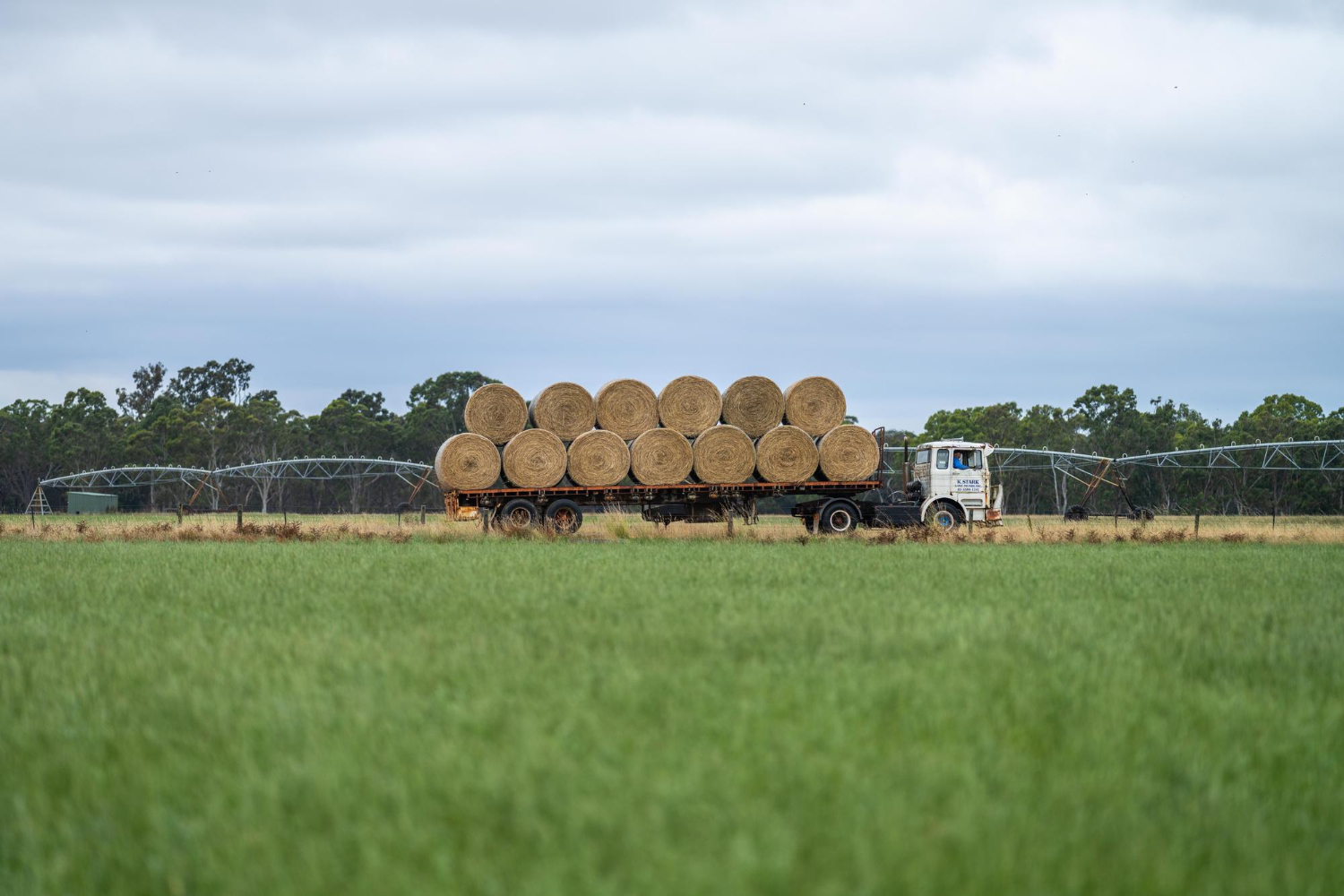
By 2021, PRESPL emerged as India’s leading biomass supply chain company. It aggregated over 200,000 tonnes of biomass annually, converting agricultural residues into briquettes and pellets to supply renewable steam to industries. PRESPLE also experimented with providing briquettes for cremation of dead-bodies during Covid 19 pandemic and also designed and developed a customized cremation platform that allowed for most effective use of briquettes in open funeral pyres. Several state governments gave permission to their state cremation agencies to collaborate with PRESPLE, in order to provide eco-cremation option to families of the deceased.
The following article provides more details about PRESPL’s decade long journey, including funding, customer acquisition and future business opportunities:
In 2025, PRESPL entered the biochar business through a strategic partnership with APChemi (a pyrolysis technology leader) and Intellecap (a climate finance advisory) to launch BiocharIND—India’s largest biochar-based carbon credit platform. Biochar is a stable form of carbon and can be used as a soil amendment to improve soil health, retain water and nutrients, and sequester carbon from the atmosphere. BiocharIND planned to set up five large-scale projects in Punjab-Haryana, each processing 100 tonnes per day of biomass, to transform crop residue—otherwise burnt in open fields—into high-value biochar.
APChemi’s biochar production process used pyrolysis to convert biomass into three main outputs: ~0.3 tonnes of biochar, 0.3–0.4 tonnes of bio-oil (also known as wood vinegar) and ~0.3–0.4 tonnes of syngas, per 1 tonne of dry biomass. Biochar is a stable carbon form, containing 70–80% carbon by mass, which, when used as a fertilizer, sequesters carbon in the soil for hundreds of years. Meanwhile, bio-oil and syngas—containing ~60% carbon content—can substitute for fossil fuels, thereby avoid emissions.
Thus, BiocharIND platform’s plan is to deliver carbon removal through biochar sequestration and carbon avoidance by displacing fossil fuels. Additionally, the biochar’s ability to enrich soil and improve fertility, can help enhance crop yields by up to 30%, thus has the potential to benefit millions of smallholder farmers in the country. To contribute towards the partnership, Monish planned to leverage PRESPLE’s biomass sourcing expertise across 21 states of India, while APChemi would supply the pyrolysis technology, and Intellecap would bring in carbon market know-how. This tripartite collaboration, if successfully executed, had the potential to create a vertically integrated, scalable, and impactful model. This model could not only tackle India’s stubble burning crisis but also had the potential to unlock new revenue streams through voluntary carbon markets, in the process create a regenerative, climate-smart agriculture ecosystem.
By 2025, PRESPL was strategically evolving its business to capture multiple high-impact growth opportunities. A centrepiece of this expansion was strengthening its upstream biomass supply chain—doubling its capacity for aggregation, densification, and secure transport of agri-residue to industrial off-takers across India. Concurrently, PRESPL was in the process of channelling its expertise into carbon finance by monetizing carbon credits from its biomass projects. Notably, the company had launched BiocharIND in partnership with APChemi and Intellecap, a pioneering biochar-based carbon credit platform capable of sequestering CO₂ and improving soil health—all while generating significant carbon credits. Looking forward, PRESPL was exploring entry into the CCUS (Carbon Capture, Utilization, and Storage) space, particularly focused on capturing carbon at the source during biomass combustion and transforming it into value-added products like graphene. To accelerate this, PRESPL was forging partnerships with emerging CCUS startups. In parallel, PRESPL planned to diversify through biomass-to-CBG (Compressed Biogas) ventures and eventually biomass-to-biofuel initiatives, pursuing commercial feasibility in alignment with its mission of sustainable energy transformation.
The Strategic Carbon Credits Dilemma
As he was waiting for his flight to land in Bangalore airport Monish was deep in thought. Being a highly inspirational speaker, he was invited to give a talk in Indian Institute of Management Bangalore (IIMB) about the need for young MBA students to enter the biomass-based energy industry. But his thoughts were fully occupied by his current dilemma of choosing an appropriate first project for carbon credit registration.
In order to obtain carbon credits that could be sold in global carbon trading platforms like European Union’s Emission Trading System (ETS), one had to register the relevant projects with organizations like Verra or Gold Standard, which verify and certify carbon offset projects. This registration process was costly, resource-intensive, lengthy and took anywhere from one to three years. Also, securing carbon credits from multiple projects within the same company was very difficult and was often discouraged or rejected by these registries.
Monish had three competing projects to choose from, each with its own benefits and trade-offs:
- Industrial Boiler Project
These projects were already operational, well-established, and were generating measurable emission reductions. Monish felt that filing this project for carbon credits was low in risk and easier to document. However, he had a nagging feeling that the carbon credits per tonne of biomass used in boilers are likely to be moderate and could limit overall financial upside. - Biochar Project
The BiocharIND project, consisting of 5 biochar production plants with each plant processing 100 tonnes of biomass per day was the second option. Due to their significant carbon sequestration abilities, Monish knew that Biochar projects typically offered very high carbon credit potential. Yet, the challenge was the timing: the plants will take at least three years to become operational, certified, and capable of generating carbon credits. - Eco-Cremation Project
Eco-cremation also had high potential for carbon credit generation. However, this pathway was fraught with uncertainty. Scaling required convincing traditional crematoriums to shift from wood to briquettes, which is a slow and culturally sensitive process. Moreover, Verra had no clear precedent for such a methodology, making approval far from guaranteed.
Caught between certainty versus scale, present revenue versus future potential, and methodological safety versus innovation, Monish must determine where PRESPL should invest its limited resources for carbon credit registration. At stake was not merely project selection — but PRESPL’s identity within the evolving architecture of global climate markets.
Perhaps he should give this as a project to some smart IIMB students, Monish thought, as the flight landed in Bengaluru international airport, bringing him closer to his destination.