
German Indian Mobility Summit 2026: Building transcontinental corridors with global impact
NSRCEL, jointly with the German Indian Innovation Corridor, hosts cross-border conclave on co-creating and scaling solutions across mobility corridors
26 May, 2026, Bangalore: NSRCEL, the start-up incubator of IIM Bangalore, in collaboration with the German Indian Innovation Corridor (GIIC), hosted the German Indian Mobility Summit 2026, a high-impact summit aimed to accelerate cross-border collaboration in next-generation mobility. From EVs and AI-driven transport, to smart infrastructure and sustainable systems, the one-day summit focused on cutting-edge innovations shaping the future of mobility.
Bringing together the most relevant minds across the India-Germany innovation corridor, the summit served as a dynamic arena for mobility start-ups, industry and innovation leaders, established corporations, investors, VCs, policymakers, researchers, and ecosystem enablers to engage in substantive dialogue on the future of mobility, discover partnership as well as funding opportunities, and gain insights into emerging mobility trends and technologies.
Merging Indian and German talent pools for mobility, innovation and global impact
The summit featured keynote addresses by experts from across the mobility and innovation ecosystem. The talks highlighted the fact that collaboration between India and Germany in mobility transition has huge potential in leveraging Germany’s engineering talent, technological expertise and execution capability with India’s massive speed, scale, entrepreneurial spirit and skilled workforce, to create tangible outcomes resulting in a robust and sustainable future.
It was pointed out that mobility is currently going through a massive transition process which is no longer about the vehicles being built, but also about software, energy, data and the urban environment. Electric vehicles (EV)s are becoming mainstream and Artificial Intelligence (AI) is transforming logistics. Clean and connected transportation, and sustainable infrastructure to achieve the same, are what we need to strive for. For India, mobility is a revolution, a vehicle of economic progress, and the room for growth is staggering in that area. India has the opportunity to build a new system and can leapfrog to a digital electric era. The speakers also pointed out that institutions such as IIM Bangalore’s NSRCEL have a critical role to play in shaping the future of mobility.
Providing a roadmap, the experts advised that the two countries need to work together on building infrastructure, data and digital platforms, sustainable value chains, inclusion, accessibility and safety. Mobility needs to be regarded as an economic opportunity which must serve the people. It was also stated that intelligent infrastructure will push the momentum to create changes in the mobility ecosystem. Climate technology was another aspect which was discussed in detail. People, planet and purpose need to be at the core of the vision, strategy and systems-level evolution. Risk should be made a part of the business plan. The Indo-European innovation corridor needs a new template for power, partnership, scale, ethics and cultural diversity. The speakers called for mapping, building and inspiring a future that we all want to live in.
The talks also covered partnerships between start-ups and OEMs, between universities and industries, between policymakers and innovators, with the conclusion that the future of transportation would not be built by one, but it would be cocreated. Trust, relationships and purpose were listed as key elements for successful and enduring partnerships, in order to make the mobility sector affordable, safe and environment friendly. Through such partnerships, the two nations could become a case study for other countries to follow.
During one of the sessions, the advice given by successful founders to new or aspiring founders was not to wait too long for the ideal time to launch ventures, and to focus on execution on the ground, resilience and the ability to adapt to changes. Going through difficult phases lead to the most innovative of ideas, it was pointed out.
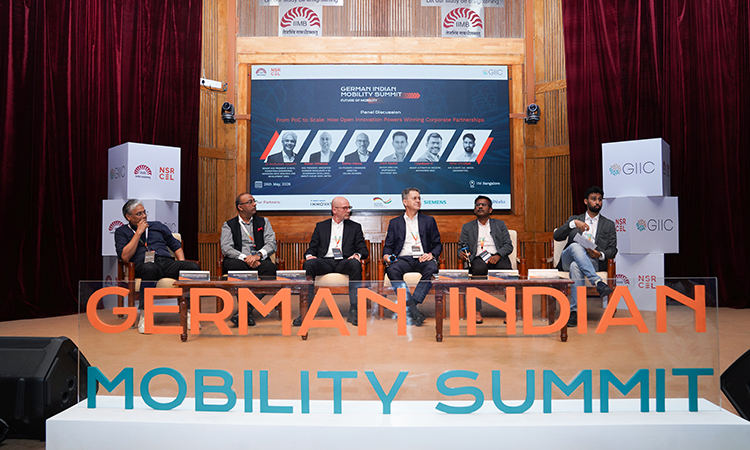
At the panel discussion on how open innovation powers winning corporate partnerships, trust was termed the currency of commerce. The other key elements listed were sustainable cross-border collaboration, moving from imitation to innovation and from prototyping to product mentality, saving cost and time, system engineering thinking, integration of platforms, using data to scale, engaging middle management as they are KPI focussed, and increased focus on newer capabilities and technical mentorship.
An insightful discussion on building India’s digital energy infrastructure through a Unified Energy Interface stressed on the need for security, affordability and availability to be handled in a balanced manner. It was further stated that although India’s energy decisions have gone digital, they are not well coordinated, hence fragmented systems are being structured to a unified energy network. The UEI interface is striving for frictionless customer experience, with an objective of ensuring that renewable energy becomes part of life beyond what it is currently.
Á founder’s perspective on building deep-tech start-ups from India for the global mobility ecosystem called for solutions to be cost effective, following a unified method, being environment friendly and to build strong IP. The discussions showcased India’s advantages, including engineering talent pool, cost innovation, strategic location, R&D ecosystem, policy as well as industry support, agile development, fast regulatory approval, and more, which help the transition from concept to the commercial scale.
Another talking point was how family offices are fueling the next generation of entrepreneurship. The session explored the key requirements of family offices including time, trust, collaboration, strong networks, etc.; the need for such offices to transform themselves from being operators to founders; and to build ecosystems for the entire mobility industry through integration. Regarding investing in mobility start-ups, investors shared that what they look for are use of data as well as skillsets, understanding and tenacity of entrepreneurs.
The core insight from the summit was that people, industries, corporations, governments and nations are ready to collaborate and build – for that to bring the desired results, trust is the glue. Sustainability, inclusivity and climate technology were the top picks for scaling solutions across mobility corridors. The German Indian Innovation Corridor, by combining the automotive legacy, precision engineering, software development and entrepreneurial scale of the two countries, is poised to actively shape the future of global mobility. To create more shared value, the next German Indian Innovation Summit will be held in Berlin during September 2026.
Click here for photo gallery
German Indian Mobility Summit 2026: Building transcontinental corridors with global impact
NSRCEL, jointly with the German Indian Innovation Corridor, hosts cross-border conclave on co-creating and scaling solutions across mobility corridors
26 May, 2026, Bangalore: NSRCEL, the start-up incubator of IIM Bangalore, in collaboration with the German Indian Innovation Corridor (GIIC), hosted the German Indian Mobility Summit 2026, a high-impact summit aimed to accelerate cross-border collaboration in next-generation mobility. From EVs and AI-driven transport, to smart infrastructure and sustainable systems, the one-day summit focused on cutting-edge innovations shaping the future of mobility.
Bringing together the most relevant minds across the India-Germany innovation corridor, the summit served as a dynamic arena for mobility start-ups, industry and innovation leaders, established corporations, investors, VCs, policymakers, researchers, and ecosystem enablers to engage in substantive dialogue on the future of mobility, discover partnership as well as funding opportunities, and gain insights into emerging mobility trends and technologies.
Merging Indian and German talent pools for mobility, innovation and global impact
The summit featured keynote addresses by experts from across the mobility and innovation ecosystem. The talks highlighted the fact that collaboration between India and Germany in mobility transition has huge potential in leveraging Germany’s engineering talent, technological expertise and execution capability with India’s massive speed, scale, entrepreneurial spirit and skilled workforce, to create tangible outcomes resulting in a robust and sustainable future.
It was pointed out that mobility is currently going through a massive transition process which is no longer about the vehicles being built, but also about software, energy, data and the urban environment. Electric vehicles (EV)s are becoming mainstream and Artificial Intelligence (AI) is transforming logistics. Clean and connected transportation, and sustainable infrastructure to achieve the same, are what we need to strive for. For India, mobility is a revolution, a vehicle of economic progress, and the room for growth is staggering in that area. India has the opportunity to build a new system and can leapfrog to a digital electric era. The speakers also pointed out that institutions such as IIM Bangalore’s NSRCEL have a critical role to play in shaping the future of mobility.
Providing a roadmap, the experts advised that the two countries need to work together on building infrastructure, data and digital platforms, sustainable value chains, inclusion, accessibility and safety. Mobility needs to be regarded as an economic opportunity which must serve the people. It was also stated that intelligent infrastructure will push the momentum to create changes in the mobility ecosystem. Climate technology was another aspect which was discussed in detail. People, planet and purpose need to be at the core of the vision, strategy and systems-level evolution. Risk should be made a part of the business plan. The Indo-European innovation corridor needs a new template for power, partnership, scale, ethics and cultural diversity. The speakers called for mapping, building and inspiring a future that we all want to live in.
The talks also covered partnerships between start-ups and OEMs, between universities and industries, between policymakers and innovators, with the conclusion that the future of transportation would not be built by one, but it would be cocreated. Trust, relationships and purpose were listed as key elements for successful and enduring partnerships, in order to make the mobility sector affordable, safe and environment friendly. Through such partnerships, the two nations could become a case study for other countries to follow.
During one of the sessions, the advice given by successful founders to new or aspiring founders was not to wait too long for the ideal time to launch ventures, and to focus on execution on the ground, resilience and the ability to adapt to changes. Going through difficult phases lead to the most innovative of ideas, it was pointed out.
At the panel discussion on how open innovation powers winning corporate partnerships, trust was termed the currency of commerce. The other key elements listed were sustainable cross-border collaboration, moving from imitation to innovation and from prototyping to product mentality, saving cost and time, system engineering thinking, integration of platforms, using data to scale, engaging middle management as they are KPI focussed, and increased focus on newer capabilities and technical mentorship.
An insightful discussion on building India’s digital energy infrastructure through a Unified Energy Interface stressed on the need for security, affordability and availability to be handled in a balanced manner. It was further stated that although India’s energy decisions have gone digital, they are not well coordinated, hence fragmented systems are being structured to a unified energy network. The UEI interface is striving for frictionless customer experience, with an objective of ensuring that renewable energy becomes part of life beyond what it is currently.
Á founder’s perspective on building deep-tech start-ups from India for the global mobility ecosystem called for solutions to be cost effective, following a unified method, being environment friendly and to build strong IP. The discussions showcased India’s advantages, including engineering talent pool, cost innovation, strategic location, R&D ecosystem, policy as well as industry support, agile development, fast regulatory approval, and more, which help the transition from concept to the commercial scale.
Another talking point was how family offices are fueling the next generation of entrepreneurship. The session explored the key requirements of family offices including time, trust, collaboration, strong networks, etc.; the need for such offices to transform themselves from being operators to founders; and to build ecosystems for the entire mobility industry through integration. Regarding investing in mobility start-ups, investors shared that what they look for are use of data as well as skillsets, understanding and tenacity of entrepreneurs.
The core insight from the summit was that people, industries, corporations, governments and nations are ready to collaborate and build – for that to bring the desired results, trust is the glue. Sustainability, inclusivity and climate technology were the top picks for scaling solutions across mobility corridors. The German Indian Innovation Corridor, by combining the automotive legacy, precision engineering, software development and entrepreneurial scale of the two countries, is poised to actively shape the future of global mobility. To create more shared value, the next German Indian Innovation Summit will be held in Berlin during September 2026.
Click here for photo gallery