
IIM Bangalore hosts Oral Health India Summit 2026, charts path from policy to practice
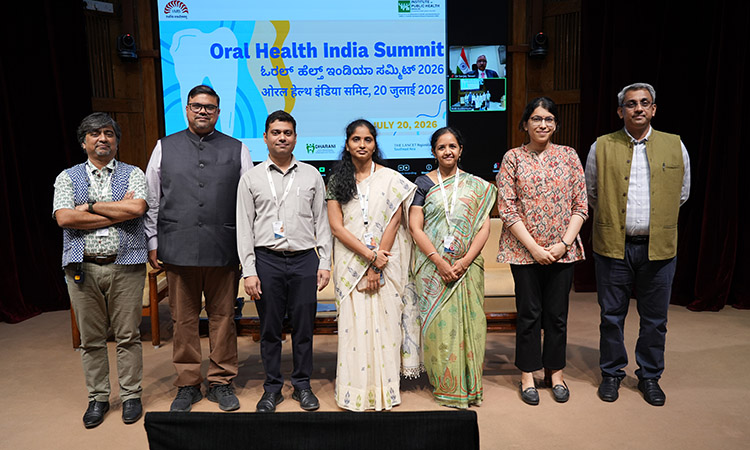
Experts across policy, research, publishing and grassroots health systems call for integrated, evidence-informed action on India's oral health burden
20th July, 2026, Bengaluru: IIM Bangalore, in collaboration with the Institute of Public Health (IPH) Bengaluru, hosted the Oral Health India Summit on 20th July, 2026, at the Institute’s auditorium. Bringing together policymakers, researchers, clinicians, publishers, and community health practitioners to address the persistent gap between India's oral disease burden and its place on the national health policy agenda.
Inaugural Session: Framing Oral Health as a Policy Priority
Dr. Prashanth N S, Director of IPH Bengaluru, formally inaugurated the summit. Trained as an MBBS doctor, he reflected on how his subsequent work in public health and research revealed the scale of neglect around oral health in Indian clinical practice, drawing a parallel to the similarly weak integration of mental health in the broader health system. He called for oral health promotion to begin not just in clinics but at the community level, including through Anganwadi, to enable early and widespread impact.
Dr. Sanjay Tiwari, Chairperson, National Dental Commission, noted that nearly half of India's population suffers from some form of oral disease, yet the burden remains largely invisible in national health planning. He argued that evidence and policy alone are insufficient without collaborative, cross-sector action, framing the summit as a step toward the vision of a Viksit Bharat 2047. He also pointed to the recently accepted National Oral Health Framework, expected to be released shortly, as a roadmap spanning promotion, prevention, diagnosis, treatment, workforce development, digital health, surveillance and research, in alignment with the WHO's global strategy on oral health.
Session 1: Panel on Oral Health Policy and Agenda Setting
Moderated by Dr. Rajeev B R, Assistant Professor, Institute of Public Health (IPH) Bengaluru, this session examined the structural reasons oral health remains sidelined in India's policy discourse, citing high disease burden, weak surveillance systems, and low visibility in instruments such as NFHS-6. "Agenda-setting is not only about evidence, but also about timing, institutions and political leadership,” he said.
Dr. Ashoo Grover, Scientist G & Head, Delivery Research Division, ICMR, Government of India, pointed to the absence of oral-health mortality data as a key reason policymakers deprioritise the issue, alongside a shortage of quality dental workforce at the community health centre level and a weak research culture in the field.
Prof. O P Kharbanda, Former Head, Centre for Dental Education and Research, AIIMS, drew on decades of public health experience to argue that credible policy engagement requires sustained, demonstrated commitment rather than one-off advocacy. He called for dedicated research positions within dental institutions, stronger integration with the Rashtriya Bal Swasthya Karyakram (RBSK), and renewed government focus on sugar consumption, tobacco taxation and areca nut use as upstream drivers of oral disease.
Dr. Raman Preet, Research Coordinator, Department of Epidemiology and Global Health, Umea University, Sweden, spoke to the scale of the challenge globally, noting the mismatch between India's population and the limited worldwide dentist workforce, and argued that India cannot rely on outside expertise to meet its own oral health training needs. She also highlighted community dentistry as a distinctive strength of the Indian training system relative to European models.
Prof. Manu Raj Mathur, Honorary Professor, Public Health Foundation of India, argued that the core barrier is not a shortage of evidence but a failure to translate it into policy language and sustained advocacy. He said, "Evidence has never been a problem, and it never will be. The problem is that we haven't translated that evidence into action."
He cited repeated systematic reviews conducted between 2002 and 2025 showing little change in the barriers politicians face in engaging with public health evidence and called for a shift from research focused solely on establishing ‘so what’ toward implementation-focused work addressing ‘then what.’
Session: Promoting Oral Health Research — Publishing Perspectives
Dr. Apoorva Dharmendra, Senior Editor, The Lancet Regional Health – Southeast Asia, spoke on the role of academic publishing in disseminating regional oral health evidence. She outlined the journal's mission, established in 2022 as part of The Lancet's regional series, to provide a platform for locally authored, open-access research from Southeast Asia. She encouraged early-career dental researchers to prioritise methodological rigour, local relevance, and meaningful local authorship in their submissions, and to view publication not as an endpoint but as a step towards influencing practice and policy.
Session 2: Dental Workforce Panel
The second panel, moderated by Dr. Aswathy Ram, Research Assistant, IPH Bengaluru, examined workforce capacity, distribution and integration with primary health care. Data presented showed stark geographic and gender imbalances in India's dental workforce: 84% of dental specialists are concentrated in urban areas despite 68% of the population residing in rural regions, while women comprise only 37% of registered dental specialists. India's dentist-to-population ratio, at 1:3,846, is nominally better than the WHO-recommended benchmark of 1:7,500, but conceals sharp regional disparities, with a workforce distribution "Gini coefficient" of 0.56 indicating severe unevenness across states.
Dr. Chandrashekar Janakiram, President, Undergraduate and Postgraduate Dental Education Board, National Dental Commission, discussed reforms underway to recalibrate dental education around the realities of Indian patients rather than imported curricula, including a proposed Indian Dental Qualification Framework offering structured career pathways from BDS through specialisation and doctoral study.
Dr. Malu Mohan, Assistant Professor, IPH Bengaluru, drawing on her doctoral research on graduate preparedness, found that a significant proportion of recent dental graduates, particularly from private institutions, report feeling underprepared for independent practice, not only in technical skills but in communication, ethics and understanding of health systems.
"The state must step up; not because dentists need jobs, but because public oral health must become a priority. Prevention and promotion are public goods that markets alone will never deliver," as she called for stronger public stewardship of oral health prevention and promotion, arguing that market-driven private practice alone cannot deliver these public goods.
Dr. Starry Dcruz, Senior Programme Coordinator, Lok Swasthya SEWA, Gujarat, shared insights from grassroots work with informal women workers, noting that oral health care is frequently deferred in favour of daily wages, pushing communities toward home remedies until pain becomes severe. She called for integrating oral health screening into existing community touchpoints such as Nirmaya camps and village health and nutrition days, alongside strengthening school oral health programmes.
Prof. Allen Ugargol, Public Policy area, IIMB, closed the panel with a systems-level critique, highlighting the absence of a dynamic, accurate national dental workforce registry and the unchecked growth of private dental colleges without corresponding workforce planning. He called for sustained collective engagement by the dental fraternity with policymakers, and for oral health to be brought within Universal Health Coverage and Sustainable Development Goals frameworks, cautioning that systemic reform will remain limited without dedicated funding.
He said, "Policy does not change through one conversation; it requires sustained engagement. If we want evidence to translate into action, oral health must be integrated into Universal Health Coverage, supported by robust workforce planning and backed by adequate funding.”
Session 3: Integration and Implementation of Oral Health in Primary Health Care
The third session, co-moderated by Dr. Pragati Hebbar, Dean, T. T. Narasimhan School of Advanced Studies, IPH, and Dr Lathadevi Chilgod, Centre Lead, Centre for Health Systems, IPH, turned to the practical realities of embedding oral health within primary health care and NCD programmes.
Dr Manjula, Deputy Director, State Oral Health Program, NHM, Government of Karnataka, stressed that integration will not happen organically without clear guidelines governing service delivery. Dr Srinivas, Taluk Health Officer, Government of Karnataka, spoke to the gap between strong policy intent and weak on-ground implementation, pointing to hands-on training and capacity building of community health workers, delivered through modules in Kannada and English, as a practical lever for change. "There is strong intent to do good, but on the ground, oral health implementation still lags," he said.
Dr. Shobharani, a Medical Officer with the Karnataka government, called for team-based screening involving ASHA workers using simple, standardised checklists, alongside strengthened dental facilities at the primary care level. “Digital platforms offer a powerful opportunity to expand oral health awareness through simple, accessible educational content that reaches every community," she said in her closing remarks.
Mrs. Mangalamma, a community health worker at a Primary Health Centre in Karnataka, offered a grassroots perspective on why communities often do not seek oral health care: lost daily wages, transport costs, and long queues at taluk-level hospitals discourage people from travelling for treatment that could instead be delivered closer to home.
The panel noted that in a pilot DHARANI model, spanning two primary health centres, more than 1,500 patients were screened within ten months, though referral loops for complex cases, such as those requiring root canal treatment, remain difficult to close given resource constraints. Dr. Priyadarshini, a Chief Dental Health Officer with Karnataka's government, shared her experience running training, outreach, and school sealant programmes across a district, while flagging that gaps in continuity of care and public awareness remain the central bottlenecks. Panellists closed by discussing the potential of digital tools, including short videos and a dedicated YouTube channel for Karnataka's National Oral Health Programme, to scale awareness generation.
Session 4: Panel on Commercial Determinants of Oral Health
The fourth session, moderated by Dr Upendra Bhojani, Senior Fellow and Centre Lead, Centre for Commercial Determinants of Health, IPH, examined how commercial forces products, business practices, and the broader political economy- shape oral health outcomes and inequities.
In his framing presentation, Dr. Bhojani outlined how commercial determinants of health can be understood at three levels: harmful or beneficial products themselves; the marketing, production, and political activities of businesses; and the broader economic and regulatory environment that enables or constrains those activities. He illustrated the framework with examples ranging from tobacco and sugary beverage pricing strategies to corporate-funded nutrition research and lobbying.
Dr Ashish Solanki, Deputy Commissioner of Income Tax, Ministry of Finance, Government of India, joining as an individual contributor, discussed the economic case for fiscal measures, framed through concepts such as market failure, negative externalities, and Pigovian taxation, to address harmful health products including sugary beverages and tobacco. He pointed to international precedents such as the UK's soft drinks industry levy and argued that oral health should be positioned within the broader non-communicable disease and universal health coverage agenda rather than addressed in isolation, given shared risk factors such as sugar and tobacco.
Dr Shehnaz Khan, Researcher, Public Health Foundation of India, unpacked the psychological science underlying industry marketing strategies, including repeated brand exposure and the use of celebrity endorsement to transfer aspirational meaning onto products, and highlighted regulatory gaps, such as ambiguous definitions of ‘misleading’ advertising and industry involvement in shaping voluntary labelling schemes like India's proposed health star rating. She quoted, Individual choice does not occur in a vacuum; it is shaped by everything we see, hear and talk about."
Dr Malu Mohan, Assistant Professor, IPH Bengaluru, spoke to the financialization of private dental care delivery, distinguishing it from earlier commercialisation: healthcare establishments are increasingly treated as investment assets expected to generate returns within a fixed timeframe, with implications for clinical autonomy and quality of care. “Healthcare is no longer just a commodity; it is becoming an asset, one investors expect to double or triple within a few years,” she noted.
Dr Pragati Hebbar drew on her doctoral research on tobacco control implementation in Karnataka to highlight transferable lessons for other health-harming industries, including the importance of enforcement, restrictions on brand stretching, inter-sectoral coordination across health, education, and transport departments, and anticipating predictable industry tactics such as discrediting science and legal intimidation of regulators.
The summit concluded with the vote of thanks by Ms. Gouhar Sha from the Institute of Public Health (IPH) Bengaluru, who expressed gratitude to the speakers, panellists, moderators, and participants from across India for making the Oral Health Summit a success. She also noted that the summit fostered meaningful discussions on oral health policy, workforce strengthening, primary healthcare integration, scientific publishing, and the commercial determinants of health.
Click here for photo gallery
IIM Bangalore hosts Oral Health India Summit 2026, charts path from policy to practice
Experts across policy, research, publishing and grassroots health systems call for integrated, evidence-informed action on India's oral health burden
20th July, 2026, Bengaluru: IIM Bangalore, in collaboration with the Institute of Public Health (IPH) Bengaluru, hosted the Oral Health India Summit on 20th July, 2026, at the Institute’s auditorium. Bringing together policymakers, researchers, clinicians, publishers, and community health practitioners to address the persistent gap between India's oral disease burden and its place on the national health policy agenda.
Inaugural Session: Framing Oral Health as a Policy Priority
Dr. Prashanth N S, Director of IPH Bengaluru, formally inaugurated the summit. Trained as an MBBS doctor, he reflected on how his subsequent work in public health and research revealed the scale of neglect around oral health in Indian clinical practice, drawing a parallel to the similarly weak integration of mental health in the broader health system. He called for oral health promotion to begin not just in clinics but at the community level, including through Anganwadi, to enable early and widespread impact.
Dr. Sanjay Tiwari, Chairperson, National Dental Commission, noted that nearly half of India's population suffers from some form of oral disease, yet the burden remains largely invisible in national health planning. He argued that evidence and policy alone are insufficient without collaborative, cross-sector action, framing the summit as a step toward the vision of a Viksit Bharat 2047. He also pointed to the recently accepted National Oral Health Framework, expected to be released shortly, as a roadmap spanning promotion, prevention, diagnosis, treatment, workforce development, digital health, surveillance and research, in alignment with the WHO's global strategy on oral health.
Session 1: Panel on Oral Health Policy and Agenda Setting
Moderated by Dr. Rajeev B R, Assistant Professor, Institute of Public Health (IPH) Bengaluru, this session examined the structural reasons oral health remains sidelined in India's policy discourse, citing high disease burden, weak surveillance systems, and low visibility in instruments such as NFHS-6. "Agenda-setting is not only about evidence, but also about timing, institutions and political leadership,” he said.
Dr. Ashoo Grover, Scientist G & Head, Delivery Research Division, ICMR, Government of India, pointed to the absence of oral-health mortality data as a key reason policymakers deprioritise the issue, alongside a shortage of quality dental workforce at the community health centre level and a weak research culture in the field.
Prof. O P Kharbanda, Former Head, Centre for Dental Education and Research, AIIMS, drew on decades of public health experience to argue that credible policy engagement requires sustained, demonstrated commitment rather than one-off advocacy. He called for dedicated research positions within dental institutions, stronger integration with the Rashtriya Bal Swasthya Karyakram (RBSK), and renewed government focus on sugar consumption, tobacco taxation and areca nut use as upstream drivers of oral disease.
Dr. Raman Preet, Research Coordinator, Department of Epidemiology and Global Health, Umea University, Sweden, spoke to the scale of the challenge globally, noting the mismatch between India's population and the limited worldwide dentist workforce, and argued that India cannot rely on outside expertise to meet its own oral health training needs. She also highlighted community dentistry as a distinctive strength of the Indian training system relative to European models.
Prof. Manu Raj Mathur, Honorary Professor, Public Health Foundation of India, argued that the core barrier is not a shortage of evidence but a failure to translate it into policy language and sustained advocacy. He said, "Evidence has never been a problem, and it never will be. The problem is that we haven't translated that evidence into action."
He cited repeated systematic reviews conducted between 2002 and 2025 showing little change in the barriers politicians face in engaging with public health evidence and called for a shift from research focused solely on establishing ‘so what’ toward implementation-focused work addressing ‘then what.’
Session: Promoting Oral Health Research — Publishing Perspectives
Dr. Apoorva Dharmendra, Senior Editor, The Lancet Regional Health – Southeast Asia, spoke on the role of academic publishing in disseminating regional oral health evidence. She outlined the journal's mission, established in 2022 as part of The Lancet's regional series, to provide a platform for locally authored, open-access research from Southeast Asia. She encouraged early-career dental researchers to prioritise methodological rigour, local relevance, and meaningful local authorship in their submissions, and to view publication not as an endpoint but as a step towards influencing practice and policy.
Session 2: Dental Workforce Panel
The second panel, moderated by Dr. Aswathy Ram, Research Assistant, IPH Bengaluru, examined workforce capacity, distribution and integration with primary health care. Data presented showed stark geographic and gender imbalances in India's dental workforce: 84% of dental specialists are concentrated in urban areas despite 68% of the population residing in rural regions, while women comprise only 37% of registered dental specialists. India's dentist-to-population ratio, at 1:3,846, is nominally better than the WHO-recommended benchmark of 1:7,500, but conceals sharp regional disparities, with a workforce distribution "Gini coefficient" of 0.56 indicating severe unevenness across states.
Dr. Chandrashekar Janakiram, President, Undergraduate and Postgraduate Dental Education Board, National Dental Commission, discussed reforms underway to recalibrate dental education around the realities of Indian patients rather than imported curricula, including a proposed Indian Dental Qualification Framework offering structured career pathways from BDS through specialisation and doctoral study.
Dr. Malu Mohan, Assistant Professor, IPH Bengaluru, drawing on her doctoral research on graduate preparedness, found that a significant proportion of recent dental graduates, particularly from private institutions, report feeling underprepared for independent practice, not only in technical skills but in communication, ethics and understanding of health systems.
"The state must step up; not because dentists need jobs, but because public oral health must become a priority. Prevention and promotion are public goods that markets alone will never deliver," as she called for stronger public stewardship of oral health prevention and promotion, arguing that market-driven private practice alone cannot deliver these public goods.
Dr. Starry Dcruz, Senior Programme Coordinator, Lok Swasthya SEWA, Gujarat, shared insights from grassroots work with informal women workers, noting that oral health care is frequently deferred in favour of daily wages, pushing communities toward home remedies until pain becomes severe. She called for integrating oral health screening into existing community touchpoints such as Nirmaya camps and village health and nutrition days, alongside strengthening school oral health programmes.
Prof. Allen Ugargol, Public Policy area, IIMB, closed the panel with a systems-level critique, highlighting the absence of a dynamic, accurate national dental workforce registry and the unchecked growth of private dental colleges without corresponding workforce planning. He called for sustained collective engagement by the dental fraternity with policymakers, and for oral health to be brought within Universal Health Coverage and Sustainable Development Goals frameworks, cautioning that systemic reform will remain limited without dedicated funding.
He said, "Policy does not change through one conversation; it requires sustained engagement. If we want evidence to translate into action, oral health must be integrated into Universal Health Coverage, supported by robust workforce planning and backed by adequate funding.”
Session 3: Integration and Implementation of Oral Health in Primary Health Care
The third session, co-moderated by Dr. Pragati Hebbar, Dean, T. T. Narasimhan School of Advanced Studies, IPH, and Dr Lathadevi Chilgod, Centre Lead, Centre for Health Systems, IPH, turned to the practical realities of embedding oral health within primary health care and NCD programmes.
Dr Manjula, Deputy Director, State Oral Health Program, NHM, Government of Karnataka, stressed that integration will not happen organically without clear guidelines governing service delivery. Dr Srinivas, Taluk Health Officer, Government of Karnataka, spoke to the gap between strong policy intent and weak on-ground implementation, pointing to hands-on training and capacity building of community health workers, delivered through modules in Kannada and English, as a practical lever for change. "There is strong intent to do good, but on the ground, oral health implementation still lags," he said.
Dr. Shobharani, a Medical Officer with the Karnataka government, called for team-based screening involving ASHA workers using simple, standardised checklists, alongside strengthened dental facilities at the primary care level. “Digital platforms offer a powerful opportunity to expand oral health awareness through simple, accessible educational content that reaches every community," she said in her closing remarks.
Mrs. Mangalamma, a community health worker at a Primary Health Centre in Karnataka, offered a grassroots perspective on why communities often do not seek oral health care: lost daily wages, transport costs, and long queues at taluk-level hospitals discourage people from travelling for treatment that could instead be delivered closer to home.
The panel noted that in a pilot DHARANI model, spanning two primary health centres, more than 1,500 patients were screened within ten months, though referral loops for complex cases, such as those requiring root canal treatment, remain difficult to close given resource constraints. Dr. Priyadarshini, a Chief Dental Health Officer with Karnataka's government, shared her experience running training, outreach, and school sealant programmes across a district, while flagging that gaps in continuity of care and public awareness remain the central bottlenecks. Panellists closed by discussing the potential of digital tools, including short videos and a dedicated YouTube channel for Karnataka's National Oral Health Programme, to scale awareness generation.
Session 4: Panel on Commercial Determinants of Oral Health
The fourth session, moderated by Dr Upendra Bhojani, Senior Fellow and Centre Lead, Centre for Commercial Determinants of Health, IPH, examined how commercial forces products, business practices, and the broader political economy- shape oral health outcomes and inequities.
In his framing presentation, Dr. Bhojani outlined how commercial determinants of health can be understood at three levels: harmful or beneficial products themselves; the marketing, production, and political activities of businesses; and the broader economic and regulatory environment that enables or constrains those activities. He illustrated the framework with examples ranging from tobacco and sugary beverage pricing strategies to corporate-funded nutrition research and lobbying.
Dr Ashish Solanki, Deputy Commissioner of Income Tax, Ministry of Finance, Government of India, joining as an individual contributor, discussed the economic case for fiscal measures, framed through concepts such as market failure, negative externalities, and Pigovian taxation, to address harmful health products including sugary beverages and tobacco. He pointed to international precedents such as the UK's soft drinks industry levy and argued that oral health should be positioned within the broader non-communicable disease and universal health coverage agenda rather than addressed in isolation, given shared risk factors such as sugar and tobacco.
Dr Shehnaz Khan, Researcher, Public Health Foundation of India, unpacked the psychological science underlying industry marketing strategies, including repeated brand exposure and the use of celebrity endorsement to transfer aspirational meaning onto products, and highlighted regulatory gaps, such as ambiguous definitions of ‘misleading’ advertising and industry involvement in shaping voluntary labelling schemes like India's proposed health star rating. She quoted, Individual choice does not occur in a vacuum; it is shaped by everything we see, hear and talk about."
Dr Malu Mohan, Assistant Professor, IPH Bengaluru, spoke to the financialization of private dental care delivery, distinguishing it from earlier commercialisation: healthcare establishments are increasingly treated as investment assets expected to generate returns within a fixed timeframe, with implications for clinical autonomy and quality of care. “Healthcare is no longer just a commodity; it is becoming an asset, one investors expect to double or triple within a few years,” she noted.
Dr Pragati Hebbar drew on her doctoral research on tobacco control implementation in Karnataka to highlight transferable lessons for other health-harming industries, including the importance of enforcement, restrictions on brand stretching, inter-sectoral coordination across health, education, and transport departments, and anticipating predictable industry tactics such as discrediting science and legal intimidation of regulators.
The summit concluded with the vote of thanks by Ms. Gouhar Sha from the Institute of Public Health (IPH) Bengaluru, who expressed gratitude to the speakers, panellists, moderators, and participants from across India for making the Oral Health Summit a success. She also noted that the summit fostered meaningful discussions on oral health policy, workforce strengthening, primary healthcare integration, scientific publishing, and the commercial determinants of health.
Click here for photo gallery