
India's Net-Zero transition makes definitive move from aspiration to action: Climate Innovation Summit 2026
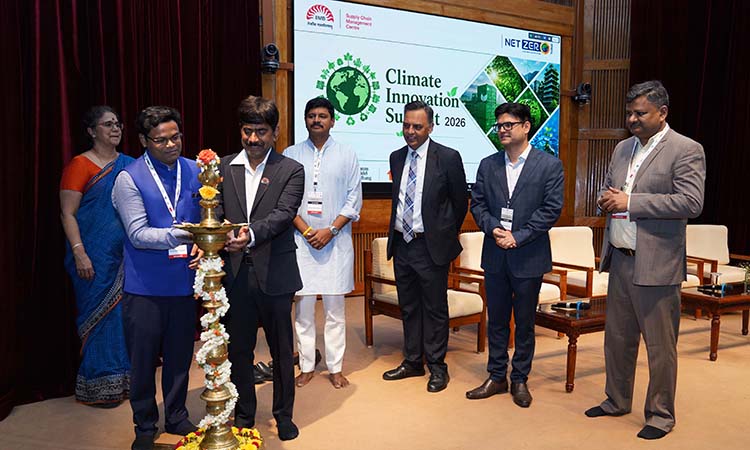
Day two sees industry heavyweights explore technologies, markets, policies and partnerships needed to accelerate sustainable growth at scale
29 May, 2026, Bengaluru: If day one focused on the urgency of climate action, day two examined the mechanisms through which it can be delivered. Through a series of expert-led sessions, roundtables and cross-sector dialogues, the Climate Innovation Summit 2026, organized by the Supply Chain Management Centre (SCMC) at IIM Bangalore, in partnership with Net Zero Think, explored evolving frameworks in the net-zero transition, from carbon markets and methane mitigation to energy storage, climate finance, sustainable mobility and digital public infrastructure. Running through the discussions was a common theme: the next phase of climate action will depend not only on technological innovation, but on the ability to build interoperable systems, scalable markets and resilient institutions.
Coal transition must reckon with energy security and climate commitments
The second day of the summit featured a special session by Dr. Ajay Kumar Singh, Visiting Professor at IIT Bombay and a researcher in climate change, methane emissions and energy systems. His extensive experience in the mining and energy sectors lent weight to discussions on the challenges and opportunities associated with measuring and mitigating methane emissions from coal mining and handling activities.
Dr. Singh situated coal within India’s broader energy security framework. “Coal in India, especially in the current geopolitical scenario, is energy security”, he stated, noting of the country’s substantial coal and lignite reserves and its continuing role as a major contributor to economic growth and energy generation. Referring to ongoing research on coal transition pathways in India, he observed that the country is likely to remain significantly dependent on coal over the next two to three decades, even as it pursues its Net Zero 2070 commitment.
He argued that reducing coal dependency would require a calibrated approach built on expanding renewable energy capacity, improving energy efficiency and investing in cleaner technologies while safeguarding economic growth and energy security.
A significant portion of the session focused on methane emissions associated with coal production. He also discussed internationally accepted methodologies for GHG accounting, including the 2006 IPCC Guidelines for National Greenhouse Gas Inventories and their subsequent refinements, before outlining approaches used to estimate fugitive methane emissions across the fuel value chain.
On the importance of robust measurement systems, Dr. Singh noted that credible emissions inventories form the foundation of effective mitigation strategies and informed climate policymaking.
Building the digital rails for future carbon markets
Carbon markets have a trust problem. They also have an interoperability problem.
In her special session, Chaitrali Bhoi, Project Lead – Open Network for Carbon Markets (ONCM) and Research Associate at the Centre for Digital Public Goods (CDPG), IIM Bangalore, explored how digital public infrastructure could address both.
Presenting ONCM, an open-protocol digital infrastructure currently being developed by CDPG, she described it as the “technological plumbing” required to support carbon markets at scale. Rather than creating a new marketplace, the initiative seeks to establish a common digital layer that can connect compliance and voluntary carbon markets while addressing challenges related to market fragmentation, pricing opacity, traceability and trust.
“Unlike centralized exchanges, an open network ensures inclusivity, enabling smallholder and community projects to participate alongside large-scale developers. It democratizes access, reduces entry barriers, and supports verifiable credit lifecycles from issuance to retirement”, she explained.
On how ONCM aims to lower transaction costs, Chaitrali spoke of digital monitoring, reporting and verification (MRV) systems, standardized documentation, compliance automation and shared infrastructure embedded into the protocol. Such digital interventions, she noted, could improve market access and enable greater participation by smaller stakeholders and resource owners.
Beyond carbon credit trading, the network is envisaged as an ecosystem supporting data exchanges, analytics services, verification providers and other market participants. The pilot, she noted, is already underway, with the initiative being developed in alignment with India's emerging Carbon Credit Trading Scheme (CCTS) and in consultation with stakeholders across India and Europe.
Renewables are rewriting the global energy story
Delivering a global perspective on the energy transition, Dr. Binu Parthan, Deputy Director – Country Engagement and Partnerships at IRENA, argued that the shift towards renewable energy is no longer being driven primarily by climate commitments, but increasingly by the economics and technology behind it, and a simultaneous and steady rise in energy demand.
He pointed to record additions in renewable power capacity, rapid growth in battery energy storage systems and accelerating electric vehicle adoption as evidence of a transition gaining momentum across regions. The recent Santa Marta Conference, which brought together 57 countries and the European Union to advance discussions on transitioning away from fossil fuels, further signaled the growing international consensus around this shift.
At the same time, recent trends project that new challenges are afoot. Rising temperatures and more frequent heatwaves are driving electricity demand upward, while the rapid expansion of artificial intelligence is beginning to reshape energy systems in unexpected ways. “From demand forecasting and grid optimization to predictive maintenance and monitoring, AI is increasingly becoming an enabler of the energy transition. Yet the growing energy requirements of data centres are also prompting fresh questions about future power demand and net-zero pathways”, said Dr. Binu.
On the future that awaits us, Dr. Parthan noted that electrification is set to become one of the defining features of the global energy transition, with electricity expected to account for more than half of final energy consumption, overwhelmingly powered by renewable sources.
“Wood is far rarer than diamonds”
One of the most anticipated sessions of the summit featured Group Captain Shubhanshu Shukla, astronaut-designate for India's historic Gaganyaan Mission, pilot of the Axiom Mission 4 to the International Space Station, and recipient of the Ashoka Chakra.
Drawing on the storied career that has taken him from the cockpit of fighter aircraft to advanced astronaut training across India, Russia and the United States, Captain Shukla offered participants a perspective available to only a handful of people worldwide.
Reflecting on humanity's place in the world, he spoke about the transformative experience of viewing Earth from space. “When you look at the planet, it is not a place, it is not a region, it is not a city, it is not a country. This is home”.
The most enduring lesson from space, he said, was that “sustainability is the only way”. “Everything that goes up there, everything that we use up there, is accounted for. You don't waste anything”, he added.
On the fragility and uniqueness of life on Earth, Captain Shukla urged participants to reconsider conventional notions of value. “We have a lot of diamonds on a lot of planets. But the organic life that we get to see here on Earth hasn’t been discovered anywhere in the universe”, he said, calling for greater urgency in protecting our ecosystems.
Responding to a question on whether space exploration and climate action are at odds, Group Captain Shukla argued the opposite. The constraints of operating in space, he noted, demand highly efficient and sustainable systems, often leading to innovations that eventually benefit life on Earth. “Sustainability becomes a way of life when you go into space”, he observed, adding that solving difficult problems in extreme environments frequently produces solutions that solve not only known challenges, but also problems we have yet to encounter or fully understand.
India’s climate challenge is also its development opportunity
Joining the summit virtually, Dr. Vibha Dhawan, Director, TERI, highlighted the unequal burden climate change places on vulnerable communities while drawing attention to India’s unique position in the global sustainability landscape.
She noted that India’s per capita energy and resource consumption remains below the global average, largely due to constraints of affordability and access rather than efficiency alone. As the country advances towards the vision of ‘Atmanirbhar Bharat’, rising incomes and improved quality of life will inevitably drive greater energy demand, making the transition to renewable energy increasingly critical.
At the same time, she cautioned that challenges around energy storage, grid infrastructure, transmission costs and managing renewable energy beyond solar generation hours would require sustained attention. Referring to growing geopolitical uncertainty and supply-chain disruptions, she also stressed the need for India to build greater resilience in an increasingly fragmented global economy.
Despite these challenges, Dr. Dhawan struck an optimistic note. India’s development journey, she argued, presents a rare opportunity to build sustainable systems from the ground up. Rather than undertaking costly cycles of breaking and rebuilding, the country has the advantage of integrating resilience, sustainability and energy transition considerations into its growth trajectory from the outset.
Day 2 of Climate Innovation Summit 2026
Designed as a solutions-oriented forum, the Climate Innovation Summit on day two featured a host of industry pioneers across three panel discussions, who offered up practical insights, trends and perspectives on climate strategy, innovation and implementation.
Across day one and two, the summit featured 70+ speakers deliberating across ten high-impact thematic tracks: Power Sector Transformation; Rethinking Climate Federalism; Decarbonizing Buildings and Infrastructure; Metals and Mining Transition; Innovation in Clean Energy Technologies; Sustainable Transportation for Net Zero World; Nature-Based Solutions; Climate Finance and Carbon Markets; Storage for C&I Consumers and ESG Implementation Journey of Enterprises.
Leaders from organizations including TERI, Smart Freight Centre, Igniting Minds, BEE, PRESPL, ISRO, Tata Steel, Indian Oil Corporation Limited, Inox Clean Energy, Jindal Steel, Brigade Group, Varhad Group, Avaada Energy, and IRENA, alongside luminaries from climate finance, industrial decarbonization, ESG, carbon markets, sustainable mobility, and green technology domains, deliberated on sector-by-sector pathways for power, industry, transport and critical minerals over the course of the two-day conference.
Click here for the Day 1 story.
India's Net-Zero transition makes definitive move from aspiration to action: Climate Innovation Summit 2026
Day two sees industry heavyweights explore technologies, markets, policies and partnerships needed to accelerate sustainable growth at scale
29 May, 2026, Bengaluru: If day one focused on the urgency of climate action, day two examined the mechanisms through which it can be delivered. Through a series of expert-led sessions, roundtables and cross-sector dialogues, the Climate Innovation Summit 2026, organized by the Supply Chain Management Centre (SCMC) at IIM Bangalore, in partnership with Net Zero Think, explored evolving frameworks in the net-zero transition, from carbon markets and methane mitigation to energy storage, climate finance, sustainable mobility and digital public infrastructure. Running through the discussions was a common theme: the next phase of climate action will depend not only on technological innovation, but on the ability to build interoperable systems, scalable markets and resilient institutions.
Coal transition must reckon with energy security and climate commitments
The second day of the summit featured a special session by Dr. Ajay Kumar Singh, Visiting Professor at IIT Bombay and a researcher in climate change, methane emissions and energy systems. His extensive experience in the mining and energy sectors lent weight to discussions on the challenges and opportunities associated with measuring and mitigating methane emissions from coal mining and handling activities.
Dr. Singh situated coal within India’s broader energy security framework. “Coal in India, especially in the current geopolitical scenario, is energy security”, he stated, noting of the country’s substantial coal and lignite reserves and its continuing role as a major contributor to economic growth and energy generation. Referring to ongoing research on coal transition pathways in India, he observed that the country is likely to remain significantly dependent on coal over the next two to three decades, even as it pursues its Net Zero 2070 commitment.
He argued that reducing coal dependency would require a calibrated approach built on expanding renewable energy capacity, improving energy efficiency and investing in cleaner technologies while safeguarding economic growth and energy security.
A significant portion of the session focused on methane emissions associated with coal production. He also discussed internationally accepted methodologies for GHG accounting, including the 2006 IPCC Guidelines for National Greenhouse Gas Inventories and their subsequent refinements, before outlining approaches used to estimate fugitive methane emissions across the fuel value chain.
On the importance of robust measurement systems, Dr. Singh noted that credible emissions inventories form the foundation of effective mitigation strategies and informed climate policymaking.
Building the digital rails for future carbon markets
Carbon markets have a trust problem. They also have an interoperability problem.
In her special session, Chaitrali Bhoi, Project Lead – Open Network for Carbon Markets (ONCM) and Research Associate at the Centre for Digital Public Goods (CDPG), IIM Bangalore, explored how digital public infrastructure could address both.
Presenting ONCM, an open-protocol digital infrastructure currently being developed by CDPG, she described it as the “technological plumbing” required to support carbon markets at scale. Rather than creating a new marketplace, the initiative seeks to establish a common digital layer that can connect compliance and voluntary carbon markets while addressing challenges related to market fragmentation, pricing opacity, traceability and trust.
“Unlike centralized exchanges, an open network ensures inclusivity, enabling smallholder and community projects to participate alongside large-scale developers. It democratizes access, reduces entry barriers, and supports verifiable credit lifecycles from issuance to retirement”, she explained.
On how ONCM aims to lower transaction costs, Chaitrali spoke of digital monitoring, reporting and verification (MRV) systems, standardized documentation, compliance automation and shared infrastructure embedded into the protocol. Such digital interventions, she noted, could improve market access and enable greater participation by smaller stakeholders and resource owners.
Beyond carbon credit trading, the network is envisaged as an ecosystem supporting data exchanges, analytics services, verification providers and other market participants. The pilot, she noted, is already underway, with the initiative being developed in alignment with India's emerging Carbon Credit Trading Scheme (CCTS) and in consultation with stakeholders across India and Europe.
Renewables are rewriting the global energy story
Delivering a global perspective on the energy transition, Dr. Binu Parthan, Deputy Director – Country Engagement and Partnerships at IRENA, argued that the shift towards renewable energy is no longer being driven primarily by climate commitments, but increasingly by the economics and technology behind it, and a simultaneous and steady rise in energy demand.
He pointed to record additions in renewable power capacity, rapid growth in battery energy storage systems and accelerating electric vehicle adoption as evidence of a transition gaining momentum across regions. The recent Santa Marta Conference, which brought together 57 countries and the European Union to advance discussions on transitioning away from fossil fuels, further signaled the growing international consensus around this shift.
At the same time, recent trends project that new challenges are afoot. Rising temperatures and more frequent heatwaves are driving electricity demand upward, while the rapid expansion of artificial intelligence is beginning to reshape energy systems in unexpected ways. “From demand forecasting and grid optimization to predictive maintenance and monitoring, AI is increasingly becoming an enabler of the energy transition. Yet the growing energy requirements of data centres are also prompting fresh questions about future power demand and net-zero pathways”, said Dr. Binu.
On the future that awaits us, Dr. Parthan noted that electrification is set to become one of the defining features of the global energy transition, with electricity expected to account for more than half of final energy consumption, overwhelmingly powered by renewable sources.
“Wood is far rarer than diamonds”
One of the most anticipated sessions of the summit featured Group Captain Shubhanshu Shukla, astronaut-designate for India's historic Gaganyaan Mission, pilot of the Axiom Mission 4 to the International Space Station, and recipient of the Ashoka Chakra.
Drawing on the storied career that has taken him from the cockpit of fighter aircraft to advanced astronaut training across India, Russia and the United States, Captain Shukla offered participants a perspective available to only a handful of people worldwide.
Reflecting on humanity's place in the world, he spoke about the transformative experience of viewing Earth from space. “When you look at the planet, it is not a place, it is not a region, it is not a city, it is not a country. This is home”.
The most enduring lesson from space, he said, was that “sustainability is the only way”. “Everything that goes up there, everything that we use up there, is accounted for. You don't waste anything”, he added.
On the fragility and uniqueness of life on Earth, Captain Shukla urged participants to reconsider conventional notions of value. “We have a lot of diamonds on a lot of planets. But the organic life that we get to see here on Earth hasn’t been discovered anywhere in the universe”, he said, calling for greater urgency in protecting our ecosystems.
Responding to a question on whether space exploration and climate action are at odds, Group Captain Shukla argued the opposite. The constraints of operating in space, he noted, demand highly efficient and sustainable systems, often leading to innovations that eventually benefit life on Earth. “Sustainability becomes a way of life when you go into space”, he observed, adding that solving difficult problems in extreme environments frequently produces solutions that solve not only known challenges, but also problems we have yet to encounter or fully understand.
India’s climate challenge is also its development opportunity
Joining the summit virtually, Dr. Vibha Dhawan, Director, TERI, highlighted the unequal burden climate change places on vulnerable communities while drawing attention to India’s unique position in the global sustainability landscape.
She noted that India’s per capita energy and resource consumption remains below the global average, largely due to constraints of affordability and access rather than efficiency alone. As the country advances towards the vision of ‘Atmanirbhar Bharat’, rising incomes and improved quality of life will inevitably drive greater energy demand, making the transition to renewable energy increasingly critical.
At the same time, she cautioned that challenges around energy storage, grid infrastructure, transmission costs and managing renewable energy beyond solar generation hours would require sustained attention. Referring to growing geopolitical uncertainty and supply-chain disruptions, she also stressed the need for India to build greater resilience in an increasingly fragmented global economy.
Despite these challenges, Dr. Dhawan struck an optimistic note. India’s development journey, she argued, presents a rare opportunity to build sustainable systems from the ground up. Rather than undertaking costly cycles of breaking and rebuilding, the country has the advantage of integrating resilience, sustainability and energy transition considerations into its growth trajectory from the outset.
Day 2 of Climate Innovation Summit 2026
Designed as a solutions-oriented forum, the Climate Innovation Summit on day two featured a host of industry pioneers across three panel discussions, who offered up practical insights, trends and perspectives on climate strategy, innovation and implementation.
Across day one and two, the summit featured 70+ speakers deliberating across ten high-impact thematic tracks: Power Sector Transformation; Rethinking Climate Federalism; Decarbonizing Buildings and Infrastructure; Metals and Mining Transition; Innovation in Clean Energy Technologies; Sustainable Transportation for Net Zero World; Nature-Based Solutions; Climate Finance and Carbon Markets; Storage for C&I Consumers and ESG Implementation Journey of Enterprises.
Leaders from organizations including TERI, Smart Freight Centre, Igniting Minds, BEE, PRESPL, ISRO, Tata Steel, Indian Oil Corporation Limited, Inox Clean Energy, Jindal Steel, Brigade Group, Varhad Group, Avaada Energy, and IRENA, alongside luminaries from climate finance, industrial decarbonization, ESG, carbon markets, sustainable mobility, and green technology domains, deliberated on sector-by-sector pathways for power, industry, transport and critical minerals over the course of the two-day conference.
Click here for the Day 1 story.